

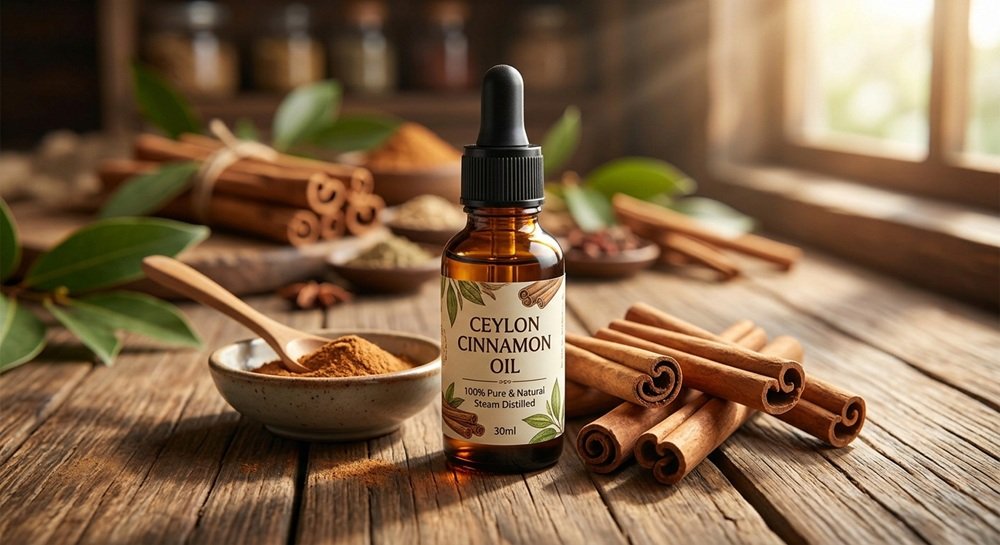
Ceylon cinnamon oil, often called true cinnamon oil, is popular worldwide for its gentle potency, therapeutic value, and superior safety profile compared to cassia cinnamon oil. It is one of the most searched natural wellness oils due to its proven health benefits, safe daily use, and Ayurvedic heritage.
Sourced from Cinnamomum verum, native to Sri Lanka, this essential oil has been used for centuries in Ayurveda, traditional medicine, aromatherapy, skincare, and natural wellness routines. In this article, we will explore what Ceylon cinnamon oil is, its key benefits, how to use it safely, why it is safer than cassia oil, and how to choose a pure, authentic product.
What Is Ceylon Cinnamon Oil?
Ceylon cinnamon oil is an essential oil extracted from the bark or leaves of the Cinnamomum verum tree, commonly known as Ceylon cinnamon or true cinnamon. This tree is indigenous to Sri Lanka, which produces over 80% of the world’s supply of authentic Ceylon cinnamon.
Cassia cinnamon oil is harsh and chemically aggressive but Ceylon cinnamon oil is known for its milder aroma, lighter chemical composition, and safer therapeutic profile. The oil is usually extracted using steam distillation, a process that preserves its bioactive compounds while maintaining purity.
There are two main types of Ceylon cinnamon oil:
- Bark oil – Warm, sweet, and spicy; rich in cinnamaldehyde
- Leaf oil – Softer and clove-like; higher in eugenol (aromatic oily liquid)
Ceylon cinnamon oil has been traditionally used for:
- Supporting digestion
- Enhancing circulation
- Boosting immunity
- Relieving muscle tension
- Promoting respiratory health
Its chemical composition includes cinnamaldehyde, eugenol, linalool, and beta-caryophyllene—compounds known for antimicrobial, antioxidant, and anti-inflammatory properties.
Because of its low coumarin content, Ceylon cinnamon oil is considered safer for regular use, especially when properly diluted. This makes it suitable for individuals seeking a natural wellness solution without the risks associated with stronger cinnamon oils.
Top 5 Ceylon Cinnamon Oil Benefits
Ceylon cinnamon oil offers multiple health and wellness benefits when used responsibly. Below are the most important benefits supported by traditional use and modern research.
Supports Digestive Health
Ceylon cinnamon oil helps stimulate digestive enzymes, reduce bloating, and support gut motility. It has traditionally been used to relieve indigestion, flatulence, and stomach discomfort.
Powerful Natural Antimicrobial
The oil exhibits antibacterial, antifungal, and antiviral properties. It helps combat harmful microbes, making it useful in immune‑boosting blends, oral hygiene products, and natural surface cleaners.
Improves Blood Circulation
When diluted and massaged onto the skin, Ceylon cinnamon oil provides a warming effect that stimulates circulation. This helps reduce muscle stiffness, joint discomfort, and cold extremities.
Boosts Immunity
Rich in antioxidants, the oil helps neutralize free radicals and supports the body’s natural immune response, especially during seasonal changes and periods of fatigue.
Enhances Mental Focus & Energy
The warm, comforting aroma of Ceylon Cinnamon Oil stimulates the senses, improves concentration, and helps combat mental exhaustion when used in aromatherapy.
Due to its mild chemical profile, these benefits can be enjoyed without the irritation risks commonly associated with cassia cinnamon oil.
How to Use Ceylon Cinnamon Oil
Ceylon cinnamon oil is versatile, but proper dilution and usage are essential for safety.
Aromatherapy
Add 2–3 drops to a diffuser to:
- Improve focus and alertness
- Freshen indoor air
- Support respiratory health
Topical Application
Ensure you dilute using a carrier oil (coconut, jojoba, or almond oil).
Recommended dilution:
- 1 drop cinnamon oil + 10 ml carrier oil
- Apply to:
- Sore muscles
- Abdomen for digestion support
- Soles of feet for immunity
Massage Therapy
Blend with warming oils like ginger or clove for circulation-enhancing massages.
Oral Care (External Use Only)
Add one drop to homemade toothpaste or mouth rinse (do not swallow).
Natural Home Care
Use in DIY surface sprays for antimicrobial cleaning.
Safety Tips:
- Perform a patch test before use
- During pregnancy, please consult a professional first
- Do not ingest unless food-grade and professionally guided
Ceylon Cinnamon Oil vs Cassia Oil: Why Ceylon Is Safer
Although both oils come from cinnamon species, Ceylon cinnamon oil and cassia cinnamon oil are not the same—chemically, therapeutically, or in terms of safety.
1. Botanical Differences
• Ceylon cinnamon oil: Cinnamomum verum
• Cassia cinnamon oil: Cinnamomum cassia, burmannii, or loureiroi
Ceylon cinnamon is native to Sri Lanka, while cassia varieties are mainly grown in China, Indonesia, and Vietnam.
2. Chemical Composition
The most critical difference lies in coumarin content.
• Ceylon cinnamon oil: Negligible coumarin
• Cassia cinnamon oil: High coumarin levels
Do you know? The EFSA has set a limit for daily intake of coumarin. Coumarin is a compound linked to liver toxicity and skin irritation when used frequently or in high concentrations.
3. Skin Safety
Cassia oil is extremely hot and can cause:
- Skin burns
- Allergic reactions
- Sensitization
Ceylon cinnamon oil, when diluted, is far gentler, making it safer for topical and aromatherapy use.
4. Aroma and Therapeutic Use
- Ceylon oil: Sweet, soft, complex aroma
- Cassia oil: Sharp, overpowering, aggressive scent
Because of its mild nature, Ceylon oil is preferred in:
- Skincare formulations
- Massage oils
- Wellness blends
- Daily aromatherapy
5. Regulatory and Health Perspectives
Many health experts and regulatory bodies advise limiting cassia use due to coumarin exposure. Ceylon cinnamon is recommended for regular use in both culinary and therapeutic applications.
6. Long-Term Wellness
For individuals seeking sustainable, long-term wellness solutions, Ceylon cinnamon oil is the safer and superior choice.
How to Choose Pure Ceylon Cinnamon Oil
Due to high demand, many products are falsely labelled as Ceylon cinnamon oil. Use the checklist below to ensure authenticity.
- Check the Botanical Name
- Pure Ceylon cinnamon oil must clearly mention Cinnamomum verum (or Cinnamomum zeylanicum).
- Avoid oils labeled Cinnamomum cassia, Cinnamomum burmannii, or Cinnamomum loureiroi. These are cassia varieties, not true Ceylon cinnamon.
- Verify the Country of Origin
- Authentic Ceylon cinnamon comes from Sri Lanka.
- The label should state “Product of Sri Lanka” or “Origin: Sri Lanka.”
- If the origin is missing or vague, consider it a red flag.
- Understand Bark Oil vs Leaf Oil
- Ceylon cinnamon oil is extracted from either the bark or leaf.
- Bark oil is sweeter, lighter, and more expensive.
- Leaf oil is spicier and contains more eugenol.
- The label should clearly state whether it is a bark oil or leaf oil.
- Look for Steam Distillation
- Pure cinnamon oil is obtained through steam distillation.
- Avoid oils extracted using solvents or chemicals, as these reduce purity and therapeutic value.
- Check for “100% Pure” and “No Additives”
- The label should say 100% pure essential oil.
- There should be no mention of carrier oils, fragrances, alcohol, or dilutions.
- Words like “aroma oil” or “fragrance oil” indicate synthetic products.
- Review the Chemical Composition
- High-quality Ceylon cinnamon bark oil typically contains 60–75% cinnamaldehyde.
- Leaf oil should be rich in eugenol.
- Reputable brands often provide a GC/MS (Gas Chromatography–Mass Spectrometry) report.
- Assess Packaging Quality
- Pure essential oils are sold in dark amber or cobalt blue glass bottles.
- Plastic bottles can react with the oil and reduce quality.
- The bottle should have a tight cap or dropper to prevent oxidation.
- Evaluate Price Carefully
- Ceylon cinnamon oil is more expensive than cassia oil.
- Very cheap prices usually indicate dilution or substitution.
- High cost alone doesn’t guarantee purity, but extremely low cost almost guarantees impurity.
- Check Aroma and Color
- Pure Ceylon cinnamon oil has a soft, warm, sweet-spicy aroma, not harsh or burning.
- The color should be pale yellow to light brown, not dark or cloudy.
- Research the Brand Reputation
- Choose brands that specialize in essential oils.
- Look for transparent sourcing, certifications, and customer reviews.
- Avoid brands that provide minimal product information.
- Confirm Safety Guidelines
- Pure cinnamon oil is potent and should include safety warnings.
- Trusted brands clearly mention dilution advice and skin sensitivity cautions.
Conclusion
Before you spend your money on any random cinnamon oil, make sure you have our article: Ceylon Cinnamon Oil Benefits: Uses, Health Benefits & How to Use Safely ready. This will help you cross check and invest your money on the real Ceylon Cinnamon Oil. It is really important that you ensure you are intaking lesser coumarin. There are various issues involved with high coumarin content. Wandering where to buy Ceylon Cinnamon Oil from? You can head over to Export In Stock Lanka’s official website and make your purchase.